Module 1 · Prompts as the Foundation of Computation · scripted
A Conversation Can Be Written Many Ways
Overview
The last lesson showed one conversation programming one operation: a gap analysis. That conversation was written in ordinary English sentences. It did not have to be. The same task can be written in many different languages and grammars — plain prose, a labeled form, a structure that looks almost like code — and the form we choose changes how well the work comes out. This lesson looks at four conversations, each written differently, and then names what we are actually choosing when we write a prompt.
A conversation can argue against a plan
The gap analysis found what was missing. A different conversation asks for a different operation entirely — here, argue against the plan on the board:
Here is the plan our team put on the board this morning.
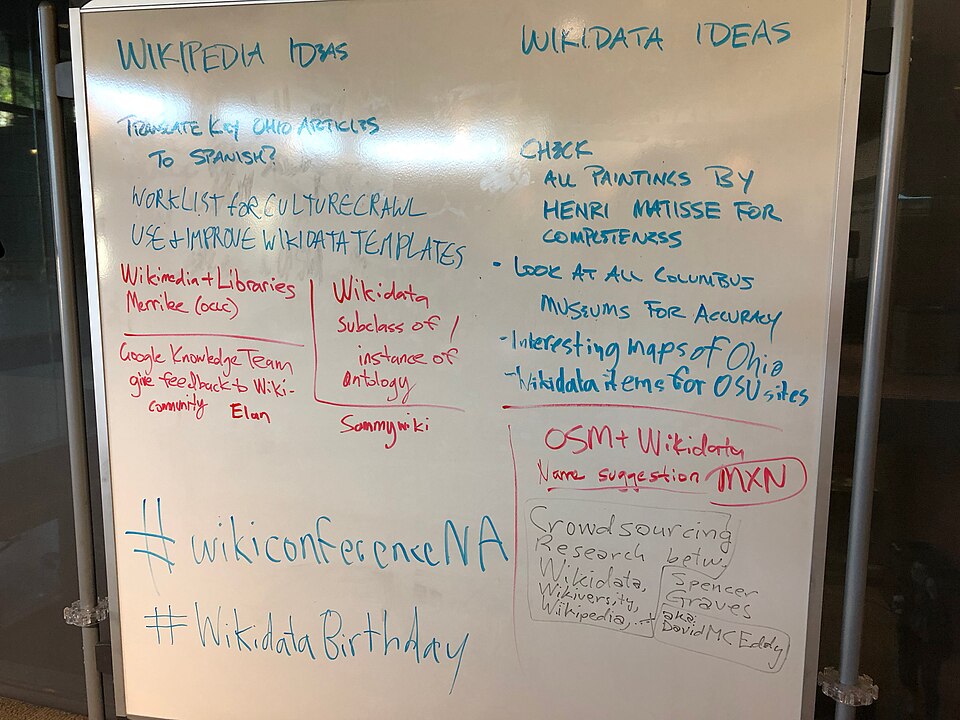 📷 the team's plan on the whiteboard
Argue against it. Take the strongest case you can that this plan fails, and give me the three most likely reasons.
1 — This is a list of ideas, not a plan. Every item names a thing to build. Nothing on the board says who does it, when it is due, or what it depends on.
2 — One item is circled, and nothing says why. If that is the first thing to do, the reason it beat the others is not written down — so the next person to look at the board will re-argue it.
3 — Several ideas assume data that may not exist yet. The board treats "use the data" as a step. Whether the data is there, and in what shape, is the risk — and it is not on the board.
A conversation can pull a structure out of a picture
Now a task with a different shape. We do not want an argument or an analysis; we want fields:
Read this receipt and return the date, the vendor, the total, and the currency.
📷a phone photo of a restaurant receipt
date: 2026-08-24 vendor: Hotel Alexandra total: 486.00 currency: NOK
The same task, written as prose
Here is a third task — write a marketing plan — asked for the way most people ask:
We sell a waterproof duffel bag for people who commute by bike. Write me a persuasive marketing plan for it. Make it two or three paragraphs and really lean into the persuasion.
Every cyclist has had the same morning: the forecast said light rain, and the laptop got wet anyway…
The same task, written as a structure
Now the identical task, written in a different grammar — labeled inputs, labeled outputs, one setting per line:
in:
  product: waterproof duffel bag
  buyer: people who commute by bike

out:
  marketing plan:
    persuasion: high
    length: 2-3 paragraphs
Every cyclist has had the same morning: the forecast said light rain, and the laptop got wet anyway…
Read Examples 3 and 4 next to each other. They ask for the same thing. The prose version buries the settings inside sentences: two or three paragraphs, really lean into the persuasion. The structured version puts each setting on its own line with a name. Neither is right in general. They are different languages for the same task, and they are easy to change in different ways — to make the second one longer, you edit one line.
Four conversations, four forms
We are choosing a language and a grammar
When we write a prompt we make two choices, and it helps to name them.
The two choices
We choose both, every time, whether or not we notice.
It is not wordsmithing
This is the part that is easy to get wrong. Working on a prompt is not hunting for magic words.
What we are actually doing
The idea to keep
A conversation is how we program computational thought.

The same task can be written in many languages and grammars.

The form we choose is part of the program — not the packaging.